
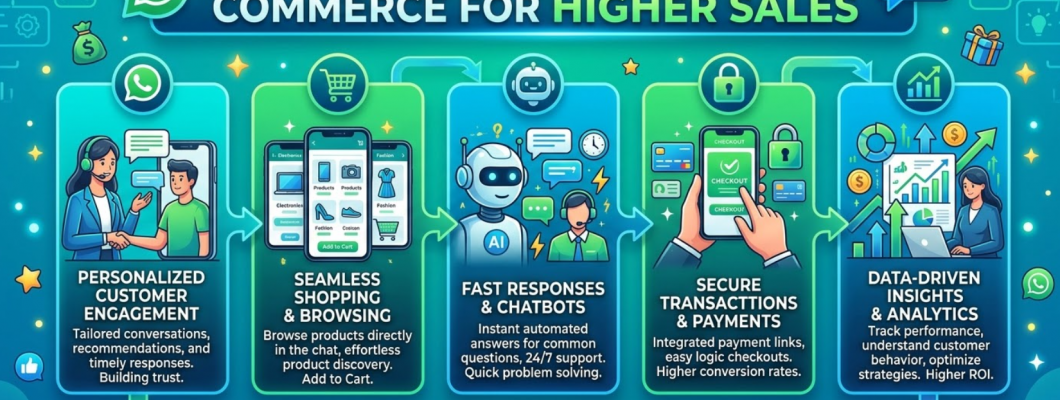
In today’s fast-moving digital world, customers expect quick responses, personalized interactions, and a smooth buying journey. Traditional marketing funnels often fall short in meeting these expectations, creating gaps between customer intent and conversion. This is where conversational commerce comes in, reshaping how businesses connect, engage, and convert their audience through real-time, meaningful interactions.
At the heart of this shift is WhatsApp, a widely used messaging platform with billions of active users worldwide. Its familiarity and ease of use make it a powerful channel for businesses to communicate directly with customers, answer queries instantly, and guide them through the purchase process.
By combining the power of messaging with personalized communication, WhatsApp enables brands to create seamless customer experiences that feel natural and engaging. From handling inquiries to recommending products and offering support, conversational commerce helps businesses build trust, improve customer satisfaction, and ultimately drive higher conversions.
Let’s take a closer look at how leveraging WhatsApp can transform customer engagement and fuel business growth.
What is Conversational Commerce?
Conversational commerce refers to the use of messaging apps, chatbots, and live chat to interact with customers throughout their buying journey—from discovery to purchase and post-sale support.
Instead of forcing customers through rigid funnels, it allows businesses to:
Answer queries instantly
Provide product recommendations
Guide purchase decisions
Offer support in real time
This approach mimics a real conversation, making the buying experience more human and engaging.
Why WhatsApp is a Game-Changer for Sales
With over 2 billion users worldwide, WhatsApp is more than just a messaging app—it’s a powerful business tool.
Key Benefits:
1. High Open Rates
WhatsApp messages have an open rate of over 90%, far higher than email marketing. This ensures your message gets seen.
2. Real-Time Communication
Customers can ask questions and receive instant replies, reducing hesitation and drop-offs.
3. Personalized Experience
Businesses can tailor conversations based on customer preferences, behavior, and purchase history.
4. Rich Media Support
You can send images, videos, PDFs, product catalogs, and even payment links—all within a chat.
5. Trust & Familiarity
Customers are already comfortable using WhatsApp, which builds trust and encourages engagement.
How Conversational Commerce Drives Higher Sales
1. Reduces Cart Abandonment
Many customers abandon carts due to unanswered questions. WhatsApp enables instant assistance, helping customers complete their purchase.
Example:
A customer unsure about product size or delivery time can get quick answers, increasing conversion chances.
2. Enables Personalized Recommendations
Using customer data, businesses can suggest relevant products.
Example:
“Hi! Based on your recent purchase, you might like this new collection.”
This kind of personalization improves upselling and cross-selling opportunities.
3. Simplifies the Buying Journey
Instead of navigating multiple pages, customers can:
Browse products
Ask questions
Place orders
—all within a single chat.
4. Builds Strong Customer Relationships
Conversational commerce creates a human touch. When customers feel heard and valued, they are more likely to return.
5. Automates Yet Feels Personal
With chatbots, businesses can automate:
FAQs
Order updates
Appointment bookings
while still maintaining a conversational tone.
Key Features of WhatsApp Business for Sales Growth
WhatsApp Business Profile
Create a professional presence with:
Business name
Description
Website link
Contact details
Product Catalog
Showcase your products directly within WhatsApp, making it easier for customers to browse and buy.
Quick Replies
Save time by using pre-written responses for frequently asked questions.
Automated Messages
Set up:
Greeting messages
Away messages
Order confirmations
Broadcast Lists
Send promotional messages to multiple customers without creating a group.
Strategies to Boost Sales Using WhatsApp
1. Click-to-WhatsApp Ads
Run ads on platforms like Facebook and Instagram that redirect users directly to WhatsApp chat.
This reduces friction and increases lead conversion.
2. Lead Qualification via Chatbots
Use automated chat flows to:
Ask questions
Understand customer needs
Recommend products
This ensures high-quality leads.
3. Abandoned Cart Recovery
Send reminders like:
“Hey! You left something in your cart. Need help completing your order?”
This can significantly increase recovery rates.
4. Exclusive Offers & Promotions
Send personalized deals:
Discount codes
Limited-time offers
Product launches
This creates urgency and boosts engagement.
5. Post-Purchase Engagement
Keep the conversation going:
Order updates
Feedback requests
Product usage tips
Happy customers are more likely to become repeat buyers.
Use Cases Across Industries
E-commerce
Product recommendations
Order tracking
Customer support
Travel & Hospitality
Booking confirmations
Travel updates
Customer assistance
Education
Course inquiries
Admission support
Notifications
Healthcare
Appointment scheduling
Patient support
Reminders
Best Practices for WhatsApp Marketing
1. Get Customer Consent
Always ensure users opt-in before sending messages.
2. Keep Messages Short & Clear
Avoid long texts. Use concise and engaging language.
3. Use Multimedia Wisely
Images and videos can improve engagement but avoid overloading users.
4. Be Responsive
Quick replies improve customer satisfaction and trust.
5. Maintain a Human Tone
Even with automation, keep the conversation friendly and natural.
Challenges to Consider
While WhatsApp offers immense potential, there are some challenges:
Message Overload: Sending too many messages can annoy customers
Privacy Concerns: Data security and compliance are critical
Scalability: Managing large volumes of chats requires automation tools
Addressing these challenges with the right strategy ensures long-term success.
Future of Conversational Commerce
Conversational commerce is rapidly evolving with advancements in AI and automation.
Future trends include:
AI-powered chatbots with human-like responses
Voice-based interactions
Integrated payment systems within chat
Hyper-personalized customer journeys
Businesses that adopt these innovations early will gain a competitive edge.
Conclusion
WhatsApp and conversational commerce are redefining how businesses interact with customers. By combining real-time communication, personalization, and automation, brands can create seamless buying experiences that drive higher sales.
Instead of pushing customers through traditional funnels, conversational commerce invites them into a dialogue making the journey more engaging, efficient, and human.
If your goal is to increase conversions, build relationships, and stay ahead in the competitive market, embracing WhatsApp as a sales channel is no longer optional it’s essential.
Leave a Comment