
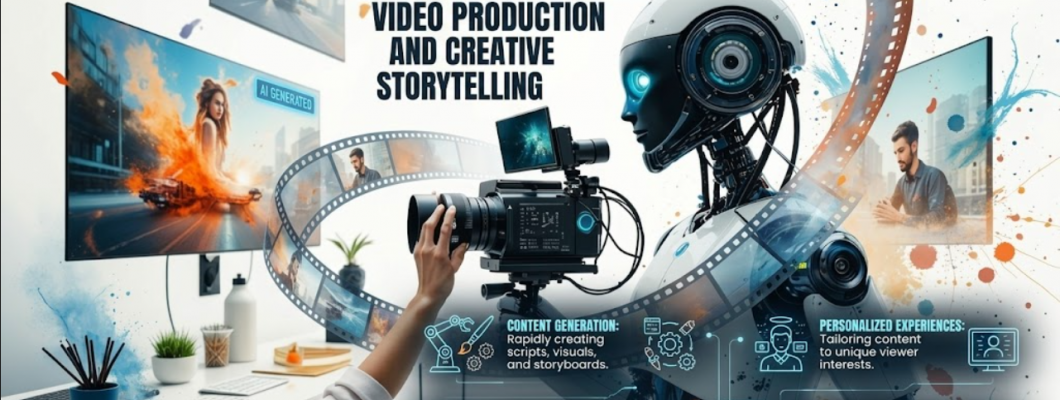
Artificial intelligence is rapidly reshaping the creative industry, and video production is one of the areas experiencing the biggest transformation. From automated editing and AI-generated visuals to personalized storytelling and virtual production, AI is changing how videos are planned, created, edited, and distributed. What once required large production teams, expensive equipment, and weeks of editing can now be accomplished faster and more efficiently with advanced AI-powered tools.
In 2026, AI is no longer just a supporting technology for creators and filmmakers it has become a central part of modern video production workflows. Businesses, content creators, marketers, educators, and entertainment companies are using AI to create more engaging, data-driven, and visually compelling content than ever before.
As digital audiences continue demanding faster, more personalized, and visually rich experiences, AI is helping creators meet those expectations while reducing production costs and saving valuable time.
This article explores how AI is transforming video production and creative storytelling, the latest trends driving the industry forward, and how creators can use AI tools effectively without losing the human touch that makes stories meaningful.
The Rise of AI in Video Production
Video content has become the dominant form of online communication across social media, streaming platforms, advertising, education, and entertainment. However, producing high-quality video content traditionally required:
Professional cameras
Editing software expertise
Large creative teams
Expensive production budgets
Long post-production timelines
AI has dramatically simplified many of these processes.
Modern AI tools can now:
Edit videos automatically
Generate scripts
Create voiceovers
Add subtitles instantly
Remove background noise
Produce realistic animations
Generate virtual actors
Personalize video experiences
Analyze audience engagement
As a result, creators of all sizes can now produce professional-quality content faster and at lower costs.
Why AI Matters in Creative Storytelling
Storytelling remains the heart of effective video production. While AI improves efficiency and automation, its real value comes from enhancing creativity and helping storytellers communicate ideas more effectively.
AI helps creators:
Discover audience preferences
Improve content pacing
Enhance visual quality
Create immersive experiences
Deliver personalized storytelling
Instead of replacing creativity, AI is becoming a powerful creative partner.
AI-Powered Scriptwriting and Idea Generation
One of the biggest changes in video production is the use of AI for content planning and script development.
AI writing tools can:
Generate video concepts
Suggest story structures
Create dialogue drafts
Write marketing scripts
Develop social media captions
Produce multilingual content
Creators now use AI to brainstorm ideas quickly and overcome creative blocks.
For businesses, AI-generated scripting tools help accelerate content production for:
Product videos
Explainer videos
Advertisements
Educational content
Social media campaigns
While human editing is still essential for emotional depth and originality, AI significantly speeds up the early creative process.
Automated Video Editing
Video editing traditionally required hours of manual work. AI-powered editing software now automates many complex editing tasks.
Modern AI editing tools can:
Detect important scenes automatically
Cut silent pauses
Sync music with visuals
Add transitions intelligently
Improve color grading
Stabilize shaky footage
Recommend editing styles
This allows creators to focus more on storytelling instead of repetitive technical tasks.
AI editing is especially valuable for:
YouTube creators
Social media marketers
Podcast producers
Online educators
Corporate video teams
Fast editing workflows are becoming essential in the era of short-form content and high-volume publishing.
AI Voiceovers and Audio Enhancement
Voice technology has improved dramatically in recent years. AI-generated voiceovers now sound more natural, emotional, and realistic than ever before.
Businesses and creators use AI voice tools for:
Narration
Audiobooks
Marketing videos
Training content
Multilingual localization
Virtual assistants
AI can also:
Remove background noise
Improve voice clarity
Match audio levels automatically
Generate subtitles instantly
These tools make video production more accessible, especially for small creators and businesses with limited resources.
Personalized Video Content
One of AI’s most powerful capabilities is personalization.
In 2026, AI helps brands create highly targeted video experiences based on:
User behavior
Purchase history
Interests
Demographics
Viewing habits
For example:
E-commerce brands create personalized product recommendations.
Streaming platforms suggest customized trailers.
Educational platforms adapt lessons to individual learners.
Marketing campaigns deliver audience-specific video messages.
Personalized storytelling increases engagement because audiences feel the content is designed specifically for them.
AI-Generated Visual Effects and Animation
AI has revolutionized animation and visual effects production.
Today’s AI tools can:
Generate realistic backgrounds
Create animated characters
Enhance CGI
Produce motion graphics
Convert text into video scenes
Create AI-generated imagery
Independent creators can now access capabilities that were previously limited to large film studios.
AI-generated visual effects are helping reduce production costs while allowing creators to experiment with new artistic styles and immersive storytelling formats.
Virtual Production and AI Studios
Virtual production is becoming increasingly popular in filmmaking and commercial content creation.
AI-powered virtual production combines:
Real-time rendering
Virtual environments
Motion tracking
AI-generated backgrounds
Instead of filming on expensive physical sets, creators can shoot inside digital environments that respond dynamically during production.
This technology became mainstream in entertainment and is now expanding into:
Advertising
Online events
Education
Social media production
Corporate presentations
Virtual studios offer flexibility, cost savings, and creative freedom.
AI and Short-Form Video Content
Short-form videos dominate social media platforms like TikTok, Instagram Reels, and YouTube Shorts.
AI tools now help creators:
Identify trending topics
Generate captions
Suggest viral hooks
Optimize video timing
Analyze engagement patterns
This allows brands and influencers to produce fast, data-driven content that performs well across algorithms.
As content demand increases, AI-powered short-form production has become a necessity for staying competitive online.
Real-Time Analytics and Audience Insights
AI does not only help create videos — it also helps analyze performance.
Modern AI analytics tools track:
Watch time
Audience retention
Engagement patterns
Click-through rates
Emotional reactions
Viewer preferences
These insights help creators improve future storytelling strategies.
Instead of guessing what audiences want, AI provides data-driven recommendations that improve content effectiveness.
AI in Marketing and Brand Storytelling
Brands are increasingly using AI-powered video storytelling to strengthen customer relationships.
AI helps marketers:
Create targeted campaigns
Produce content faster
Personalize customer experiences
Improve advertising performance
Optimize social media engagement
Modern consumers expect authentic and engaging visual experiences. AI enables brands to create more interactive and emotionally compelling content at scale.
Popular AI-driven marketing videos include:
Product demonstrations
Customer testimonials
Interactive advertisements
Personalized welcome videos
AI-generated explainers
Video storytelling has become one of the most powerful tools for brand communication.
Ethical Concerns and Challenges
Despite its benefits, AI in video production also raises important ethical concerns.
Key challenges include:
Deepfake misuse
Copyright issues
Fake media generation
Loss of creative originality
Over-automation
Privacy concerns
As AI-generated content becomes more realistic, creators and platforms must prioritize transparency and responsible usage.
Audiences increasingly value authenticity, meaning human creativity and ethical storytelling remain essential.
Will AI Replace Human Creativity?
One of the most common concerns is whether AI will replace filmmakers, editors, writers, and creators.
The reality is more balanced.
AI excels at:
Automation
Data analysis
Repetitive tasks
Speed optimization
However, humans still provide:
Emotional intelligence
Cultural understanding
Creativity
Empathy
Original storytelling
Artistic vision
AI works best as a creative assistant rather than a replacement for human imagination.
The most successful creators in 2026 are those who combine human storytelling skills with AI-powered efficiency.
The Future of AI in Video Production
AI technology will continue evolving rapidly over the coming years.
Future innovations may include:
Fully AI-generated films
Interactive storytelling experiences
Real-time language translation
Hyper-personalized video content
Advanced virtual actors
Immersive augmented reality videos
AI-assisted live broadcasting
As technology improves, video production will become even more accessible to creators worldwide.
Small businesses and independent creators will gain opportunities to compete with larger production companies using affordable AI tools.
Best Practices for Using AI in Creative Storytelling
To use AI effectively, creators should focus on balance.
Use AI for Efficiency
Allow AI to automate technical tasks like editing, captioning, and analytics.
Keep Human Creativity Central
Emotion, originality, and storytelling should remain human-driven.
Prioritize Authenticity
Audiences respond best to real and relatable stories.
Maintain Ethical Standards
Be transparent about AI-generated content and avoid misleading audiences.
Continuously Learn New Tools
AI technology changes quickly, so staying updated is essential.
Final Thoughts
Artificial intelligence is transforming video production and creative storytelling faster than ever before. From automated editing and AI-generated visuals to personalized content and advanced analytics, AI is reshaping how creators produce and share stories in the digital world.
In 2026, AI is empowering businesses, marketers, filmmakers, educators, and content creators to produce high-quality videos more efficiently while reaching audiences in more engaging and meaningful ways.
However, technology alone does not create powerful stories. The emotional connection, creativity, authenticity, and human experience behind storytelling remain irreplaceable.
The future of video production belongs to creators who can combine AI innovation with genuine human creativity. Those who embrace this balance will lead the next generation of digital storytelling and redefine how audiences experience visual content in the years ahead.
Leave a Comment