
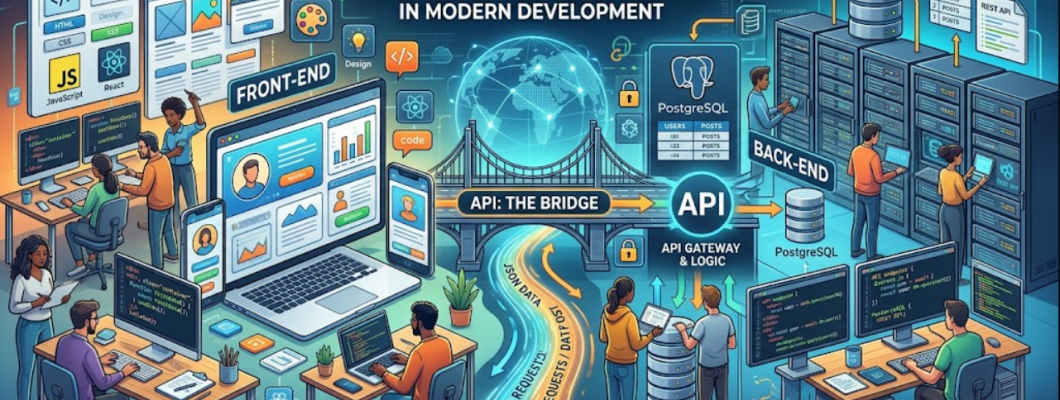
In today’s rapidly evolving digital landscape, websites and applications have transformed from simple static pages into dynamic, interactive platforms designed to deliver seamless user experiences. Every smooth interface, quick response, and real-time feature is made possible through the combined efforts of front-end and back-end development.
The front-end focuses on what users see and interact with design, layout, and usability while the back-end powers everything behind the scenes, including servers, databases, and application logic. Together, these two layers ensure that applications not only look appealing but also function efficiently and reliably.
Understanding how front-end and back-end work together is essential for anyone aiming to build, manage, or scale modern web applications. This guide breaks down their roles, highlights the technologies behind them, and explains how their integration creates fast, functional, and user-friendly digital experiences.
Understanding the Basics
What is Front-End Development?
Front-end development focuses on the part of a website or application that users directly interact with. It’s all about design, layout, and responsiveness.
Key Elements:
Visual design and structure
Navigation and user interaction
Responsiveness across devices
Core Technologies:
HTML – Defines structure
CSS – Controls styling and layout
JavaScript – Adds interactivity
Popular Frameworks:
React
Angular
Vue.js
Front-end developers ensure that websites are visually appealing, easy to use, and optimized for performance.
What is Back-End Development?
Back-end development powers the server-side of an application. It handles data storage, processing, and business logic.
Key Responsibilities:
Managing databases
Handling server requests
Building APIs
Ensuring security and authentication
Common Technologies:
Languages: Python, Java, PHP, Node.js
Databases: MySQL, MongoDB, PostgreSQL
Servers: Apache, Nginx
Back-end developers focus on making sure everything works efficiently behind the scenes.
How Front-End Meets Back-End
The real magic happens when front-end and back-end systems communicate effectively. This interaction allows users to perform actions like logging in, making purchases, or submitting forms.
The Communication Process:
A user interacts with the front-end (e.g., clicks a button).
The front-end sends a request to the back-end via an API.
The back-end processes the request and interacts with the database.
The server sends a response back to the front-end.
The front-end updates the interface accordingly.
This seamless exchange ensures real-time functionality and smooth user experiences.
The Role of APIs
APIs (Application Programming Interfaces) act as the bridge between front-end and back-end systems.
Why APIs Matter:
Enable communication between systems
Allow data exchange in real time
Support integration with third-party services
Types of APIs:
REST (Representational State Transfer)
GraphQL
SOAP
APIs ensure that the front-end can request and display data without needing to understand the complexities of the back-end.
Modern Architecture: Connecting the Layers
1. Monolithic Architecture
In traditional setups, front-end and back-end are tightly connected within a single codebase. While simple, this can limit scalability.
2. Microservices Architecture
Applications are divided into smaller, independent services. This improves flexibility and scalability.
3. Serverless Architecture
Developers can build and run applications without managing servers, relying on cloud services instead.
4. Jamstack Approach
Jamstack (JavaScript, APIs, Markup) separates front-end from back-end, improving performance and security.
Real-Time Integration in Modern Apps
Modern applications demand real-time updates, such as chat apps, live notifications, and online gaming.
Technologies Enabling Real-Time:
WebSockets
Firebase
Server-Sent Events (SSE)
These technologies allow continuous communication between front-end and back-end without constant refreshing.
Responsive and User-Centric Design
Front-end and back-end integration must prioritize user experience.
Front-End Focus:
Mobile-first design
Fast loading times
Smooth animations
Back-End Support:
Optimized database queries
Efficient server responses
Load balancing
Together, they ensure that users enjoy a seamless experience across devices.
Security: A Shared Responsibility
Security is a critical aspect of web development that involves both front-end and back-end.
Front-End Security:
Input validation
Preventing cross-site scripting (XSS)
Secure API calls
Back-End Security:
Data encryption
Authentication and authorization
Protection against SQL injection
A secure system requires both layers to work together effectively.
Tools That Bridge Front-End and Back-End
Front-End Tools:
Frameworks like React and Angular
CSS libraries like Tailwind and Bootstrap
Back-End Tools:
Express.js for Node.js
Django for Python
Spring Boot for Java
Integration Tools:
Postman for API testing
Git & GitHub for version control
Docker for containerization
These tools help developers build, test, and deploy applications efficiently.
Trends Shaping Modern Development (2026)
1. API-First Development
Applications are built around APIs to ensure flexibility and scalability.
2. Headless CMS
Separates content management from front-end presentation.
3. AI Integration
AI enhances personalization and automation in both front-end and back-end.
4. Cloud-Native Development
Applications are built specifically for cloud environments.
5. Low-Code & No-Code Platforms
Simplify development while still relying on strong back-end systems.
Career Opportunities
The demand for developers who understand both front-end and back-end is growing rapidly.
Popular Roles:
Front-End Developer
Back-End Developer
Full-Stack Developer
Web Application Developer
UI/UX Engineer
Skills in Demand:
JavaScript frameworks
API development
Database management
Cloud computing
Learning how front-end meets back-end gives you a competitive edge in the job market.
Building Your First Integrated Project
If you want to understand how these layers connect, start with a simple project.
Example Project: To-Do App
Front-End:
Create a user interface with HTML, CSS, and JavaScript
Add forms for user input
Back-End:
Build an API using Node.js or Python
Store data in a database
Integration:
Connect front-end to back-end using API calls
Display real-time updates
This hands-on approach helps you understand the full development cycle.
Best Practices for Seamless Integration
Use clean and modular code
Maintain clear API documentation
Optimize performance on both ends
Implement strong security measures
Test continuously
Following these practices ensures efficient and scalable applications.
Conclusion
Modern web development thrives on the seamless collaboration between front-end and back-end systems. While the front-end creates engaging and interactive user experiences, the back-end ensures reliability, performance, and data management.
Understanding how these two components meet and interact empowers developers to build robust, scalable, and user-friendly applications. Whether you aim to specialize in one area or become a full-stack developer, mastering this integration is key to success in today’s tech-driven world.
From writing your first line of code to deploying complex applications, the journey of connecting front-end and back-end is both challenging and rewarding unlocking endless possibilities in the digital landscape.
Leave a Comment