
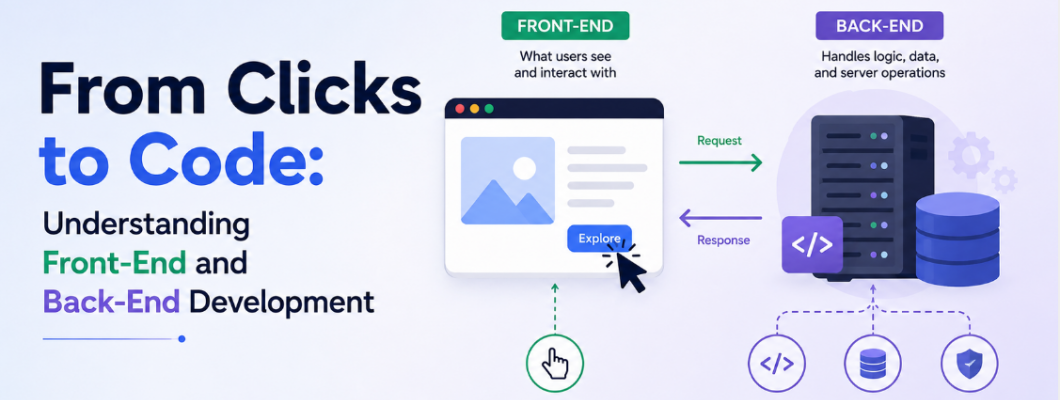
The digital world runs on websites, applications, and online platforms that millions of people use every day. From shopping online and watching videos to booking flights and managing businesses, every digital experience depends on web development. Behind every functional website lies two essential parts working together seamlessly: front-end development and back-end development.
If you’ve ever wondered how websites look beautiful, respond to clicks, store data, or process information instantly, the answer lies in the collaboration between these two development areas. Understanding front-end and back-end development is important for beginners, business owners, students, and anyone interested in technology or digital careers.
In this guide, we’ll explore what front-end and back-end development are, how they differ, the technologies they use, and why both are essential for building modern digital experiences.
What Is Web Development?
Web development is the process of creating websites and web applications. It involves designing, coding, maintaining, and optimizing digital platforms that users can access through browsers or mobile devices.
Web development is generally divided into three major categories:
Front-End Development – What users see and interact with
Back-End Development – The server-side logic and data management
Full-Stack Development – A combination of both front-end and back-end skills
Together, these components create complete and functional websites.
Understanding Front-End Development
Front-end development focuses on the visual and interactive side of a website. It’s everything users experience directly when they visit a web page.
From navigation menus and buttons to animations and layouts, front-end developers ensure that websites are attractive, responsive, and user-friendly.
What Does a Front-End Developer Do?
A front-end developer creates the interface users interact with daily. Their responsibilities often include:
Designing responsive layouts
Creating interactive elements
Improving user experience (UX)
Ensuring mobile compatibility
Optimizing website speed
Implementing visual designs into code
Maintaining browser compatibility
The main goal is to make websites visually appealing and easy to use.
Core Technologies Used in Front-End Development
1. HTML (HyperText Markup Language)
HTML forms the structure of a webpage. It organizes content such as headings, paragraphs, images, forms, and links.
Example:
Headings
Buttons
Navigation menus
Text sections
Without HTML, websites would have no structure.
2. CSS (Cascading Style Sheets)
CSS controls the appearance and layout of web pages. It helps developers style elements with colors, fonts, spacing, animations, and responsive designs.
CSS allows websites to look modern and professional across different devices.
3. JavaScript
JavaScript adds interactivity and dynamic behavior to websites.
It powers features like:
Image sliders
Dropdown menus
Pop-ups
Interactive forms
Real-time updates
Modern websites rely heavily on JavaScript for engaging user experiences.
Popular Front-End Frameworks and Libraries
Front-end developers often use frameworks and libraries to speed up development and improve performance.
React
A popular JavaScript library for building user interfaces and single-page applications.
Angular
A powerful framework maintained by Google for large-scale web applications.
Vue.js
A lightweight and flexible framework ideal for modern UI development.
Bootstrap
A CSS framework that helps create responsive websites quickly.
Skills Required for Front-End Development
Successful front-end developers typically need:
Creativity and design understanding
Problem-solving abilities
Knowledge of responsive design
Basic UI/UX principles
Attention to detail
Familiarity with browser testing tools
Strong communication skills also help when collaborating with designers and developers.
Understanding Back-End Development
While front-end development handles the visual side, back-end development powers everything happening behind the scenes.
The back-end is responsible for:
Servers
Databases
Application logic
Authentication
Security
Data processing
Whenever users log in, submit forms, make purchases, or store information online, back-end systems make it possible.
What Does a Back-End Developer Do?
Back-end developers create and manage server-side systems that support website functionality.
Their responsibilities often include:
Managing databases
Creating APIs
Handling server operations
Implementing authentication systems
Ensuring website security
Optimizing performance
Processing user requests
The back-end ensures websites work smoothly, securely, and efficiently.
Core Technologies Used in Back-End Development
1. Programming Languages
Back-end developers use server-side languages such as:
Python
Java
PHP
Ruby
Node.js
C#
Go
These languages process user requests and perform complex operations.
2. Databases
Databases store website information such as user accounts, product details, and transaction records.
Popular databases include:
MySQL
PostgreSQL
MongoDB
Oracle
SQLite
Databases allow websites to retrieve and manage information quickly.
3. Servers
Servers host websites and handle communication between users and applications.
Common server technologies include:
Apache
Nginx
Microsoft IIS
Cloud platforms like AWS and Google Cloud are also widely used.
APIs and Their Importance
APIs (Application Programming Interfaces) allow different software systems to communicate with each other.
For example:
Payment gateways
Social media integrations
Weather applications
Online booking systems
Back-end developers often create and manage APIs to connect front-end interfaces with server-side data.
Front-End vs Back-End Development
Although front-end and back-end development work together, they focus on different areas.

Both roles are equally important in creating complete websites.
How Front-End and Back-End Work Together
Front-end and back-end systems constantly communicate with each other.
Here’s a simple example of how they work together on an e-commerce website:
A user clicks the “Buy Now” button
The front-end sends the request
The back-end processes payment information
The database updates inventory
The server sends confirmation back
The front-end displays the success message
This smooth interaction creates a seamless user experience.
What Is Full-Stack Development?
Full-stack developers work on both front-end and back-end development.
They understand:
User interfaces
Server management
Databases
APIs
Deployment processes
Full-stack developers are highly versatile and valuable in startups and small development teams.
Popular full-stack combinations include:
MERN Stack (MongoDB, Express.js, React, Node.js)
MEAN Stack (MongoDB, Express.js, Angular, Node.js)
Career Opportunities in Web Development
Web development offers strong career growth, remote opportunities, and competitive salaries.
Front-End Career Roles
Front-End Developer
UI Developer
Web Designer
React Developer
JavaScript Developer
Back-End Career Roles
Back-End Developer
API Developer
Database Administrator
Server Engineer
Software Engineer
Full-Stack Roles
Full-Stack Developer
Web Application Developer
Technical Lead
With businesses increasingly moving online, demand for skilled developers continues to grow globally.
Which Development Path Should You Choose?
Choosing between front-end and back-end development depends on your interests and strengths.
Choose Front-End Development If You:
Enjoy creativity and visual design
Like interactive experiences
Prefer working with layouts and animations
Have an eye for aesthetics
Choose Back-End Development If You:
Enjoy problem-solving
Like logic and databases
Prefer working behind the scenes
Are interested in security and performance
Choose Full-Stack Development If You:
Want flexibility
Enjoy learning multiple technologies
Prefer handling complete projects
There’s no wrong choice—both fields offer rewarding opportunities.
Essential Tools Used by Developers
Modern developers rely on various tools to improve productivity.
Front-End Tools
Visual Studio Code
Figma
Chrome Developer Tools
GitHub
Sass
Back-End Tools
Postman
Docker
Firebase
Jenkins
Kubernetes
Version control systems like Git are essential for both front-end and back-end developers.
Importance of Responsive and Secure Development
Today’s users expect websites to work flawlessly across desktops, tablets, and smartphones. Front-end developers focus heavily on responsive design to ensure compatibility across devices.
At the same time, cybersecurity is more important than ever. Back-end developers implement:
Encryption
Authentication
Secure payment systems
Data protection measures
A successful website must be both user-friendly and secure.
Future Trends in Web Development
Web development continues to evolve rapidly. Some major trends shaping the future include:
Artificial Intelligence Integration
AI-powered chatbots, automation, and personalization are becoming common.
Progressive Web Apps (PWAs)
PWAs combine the benefits of websites and mobile apps.
Serverless Architecture
Developers increasingly use cloud-based serverless platforms.
Voice Search Optimization
Websites are adapting to voice-enabled searches.
Motion UI and Interactive Experiences
Modern front-end design now emphasizes immersive interactions and animations.
Developers who continuously learn new technologies remain highly competitive.
Final Thoughts
Front-end and back-end development are the two pillars of modern web applications. While front-end developers create visually engaging and interactive experiences, back-end developers build the powerful systems that manage data, logic, and security behind the scenes.
Together, they transform ideas into fully functional digital experiences used by millions every day.
Whether you’re exploring web development as a career, building your own website, or simply learning how technology works, understanding the relationship between front-end and back-end development provides a strong foundation for navigating the digital world.
From clicks to code, every successful website depends on the perfect balance between design, functionality, and performance.
Leave a Comment