
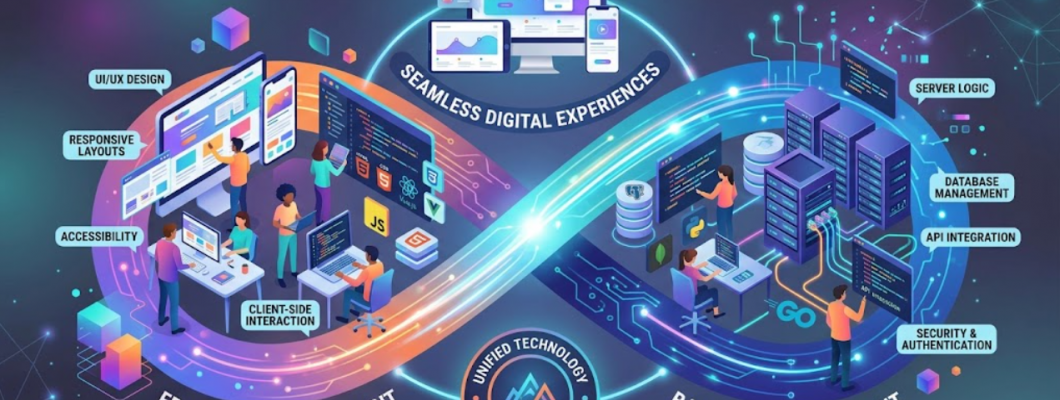
In today’s digital-first landscape, users expect websites and applications to be fast, responsive, and visually engaging. Whether shopping online, booking services, or browsing content, every interaction should feel smooth and effortless. This seamless experience is made possible through the close collaboration between front-end and back-end development.
The front-end handles everything users see and interact with, including design, layout, and navigation. In contrast, the back-end powers the system behind the scenes, managing data, servers, and application logic to ensure everything runs efficiently. Together, these two components create the backbone of modern web development.
Understanding how front-end and back-end work together is essential for building high-performing, user-friendly applications. This guide explores their integration, the technologies involved, and best practices to help developers deliver fast, reliable, and engaging digital experiences.
Understanding Front-End Development
Front-end development, also known as client-side development, is responsible for the visual and interactive aspects of a website.
Key Responsibilities:
Designing user interfaces (UI)
Ensuring responsive design across devices
Creating smooth navigation and interactions
Optimizing performance and loading speed
Core Technologies:
HTML – Structures content
CSS – Styles and layouts
JavaScript – Adds interactivity
Popular Tools & Frameworks:
React
Angular
Vue.js
Tailwind CSS
Front-end developers focus on creating user-friendly and visually appealing experiences that keep visitors engaged.
Understanding Back-End Development
Back-end development, or server-side development, powers the logic and functionality behind a website.
Key Responsibilities:
Managing servers and databases
Processing user requests
Building APIs for communication
Ensuring security and authentication
Common Technologies:
Languages: Python, Java, PHP, Node.js
Databases: MySQL, MongoDB, PostgreSQL
Servers: Apache, Nginx
Back-end developers ensure that applications run smoothly, securely, and efficiently.
How Front-End and Back-End Work Together
A seamless digital experience depends on how well the front-end and back-end communicate.
Example Workflow:
A user interacts with a website (clicks a button or submits a form).
The front-end sends a request to the back-end via an API.
The back-end processes the request and interacts with the database.
The server sends a response back to the front-end.
The front-end updates the UI with the new data.
This interaction happens instantly, creating a smooth and responsive experience.
The Role of APIs
APIs (Application Programming Interfaces) act as a bridge between the front-end and back-end.
Benefits of APIs:
Enable seamless communication
Allow integration with third-party services
Support modular and scalable development
Common API Types:
REST APIs
GraphQL APIs
APIs ensure that data flows efficiently between systems without exposing complex logic.
Performance Optimization for Seamless Experiences
Speed and performance are critical for user satisfaction.
Front-End Optimization:
Minify CSS and JavaScript files
Use lazy loading for images
Optimize assets for faster loading
Back-End Optimization:
Efficient database queries
Implement caching systems
Use load balancing for high traffic
A well-optimized system ensures faster load times and improved user engagement.
Responsive and User-Centric Design
Modern users access websites from multiple devices, making responsiveness essential.
Front-End Role:
Mobile-first design
Adaptive layouts
Smooth animations
Back-End Role:
Deliver optimized data
Support scalable infrastructure
Together, they ensure consistency and usability across all platforms.
Security as a Priority
Security is a shared responsibility between front-end and back-end systems.
Front-End Security:
Input validation
Preventing cross-site scripting (XSS)
Secure API requests
Back-End Security:
Data encryption
Authentication and authorization
Protection against SQL injection
A secure application builds trust and protects user data.
Modern Web Development Architectures
1. Monolithic Architecture
A traditional approach where the entire application—UI, business logic, and database—is built as a single, unified system. It’s easier to develop and deploy initially but becomes harder to scale and maintain as it grows.
2. Microservices Architecture
An approach where the application is broken into smaller, independent services. Each service handles a specific function and can be developed, deployed, and scaled separately, offering greater flexibility and scalability.
3. Serverless Architecture
A cloud-based model where developers build and run applications without managing servers. The cloud provider handles infrastructure, scaling, and maintenance, allowing developers to focus only on writing code and functionality.
4. Jamstack
Separates front-end from back-end using APIs and static files.
These architectures help developers build scalable and efficient applications.
Tools That Enhance Development
Front-End Tools:
VS Code
Chrome DevTools
Tailwind CSS
Back-End Tools:
Node.js
Django
Spring Boot
Integration Tools:
Postman
Git & GitHub
Docker
These tools streamline development, testing, and deployment processes.
Latest Trends in Web Development (2026)
1. AI-Powered Interfaces
User interfaces enhanced by artificial intelligence to deliver personalized experiences, smart recommendations, and automated interactions based on user behavior.
2. API-First Development
A development approach where applications are built around APIs from the start, enabling easier integration, scalability, and faster development across platforms.
3. Cloud-Native Applications
Applications designed specifically for cloud environments, allowing flexible scaling, high performance, and efficient resource management using cloud infrastructure.
4. Headless CMS
A content management system that separates the backend (content storage) from the frontend (presentation), giving developers more flexibility to deliver content across multiple platforms.
5. Real-Time Applications
Applications that provide instant updates and live interactions using technologies like WebSockets, enabling features such as live chats, notifications, and streaming.
These trends are shaping the future of web development by making applications faster, smarter, and more user-focused.
Career Opportunities
With increasing demand for seamless digital experiences, web development roles are growing rapidly.
Popular Roles:
Front-End Developer
Back-End Developer
Full-Stack Developer
UI/UX Designer
Web Application Developer
Skills in Demand:
JavaScript frameworks
API development
Database management
Cloud computing
Learning both front-end and back-end skills opens up diverse career opportunities.
Building a Seamless Application
To understand how everything works together, start with a simple project.
Example: E-Commerce Website
Front-End:
Product listings and UI design
Shopping cart interface
Back-End:
Order processing
Payment integration
Database:
Store product and user data
Integration:
Connect UI with server via APIs
Display real-time updates
This hands-on approach helps you grasp the complete development cycle.
Best Practices for Seamless Development
Write clean and modular code
Maintain clear API documentation
Optimize performance regularly
Implement strong security measures
Test across multiple devices and scenarios
Following these practices ensures efficient and scalable applications.
Conclusion
Creating seamless digital experiences requires more than just good design or powerful functionality it demands a perfect balance between front-end and back-end development. While the front-end delivers engaging and intuitive interfaces, the back-end ensures reliability, performance, and data management.
By understanding how these two components work together, developers and businesses can build applications that are fast, secure, and user-friendly. Whether you’re starting your journey in web development or looking to enhance your skills, mastering this collaboration is key to success.
In the end, seamless digital experiences are not just built they are carefully crafted through the harmony of design, logic, and technology.
Leave a Comment