
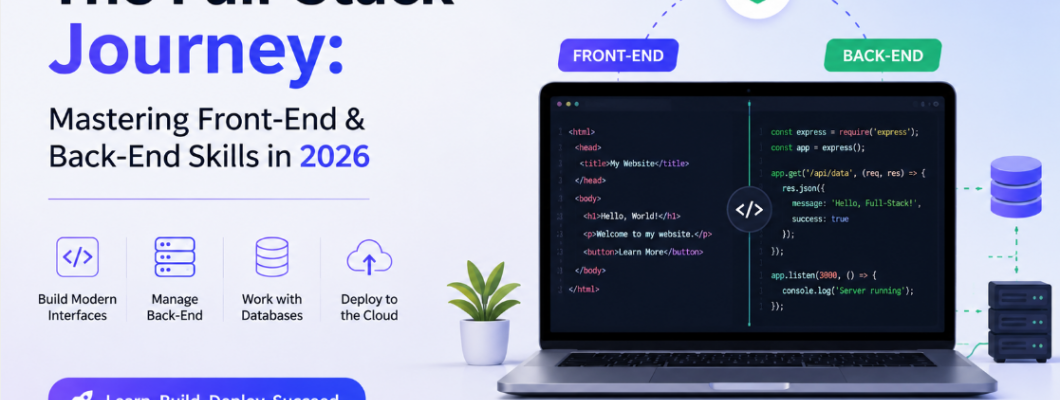
Web development is advancing rapidly, and businesses are increasingly seeking professionals who can manage both front-end and back-end technologies efficiently. This growing demand has made full-stack development one of the most valuable skills in the tech industry in 2026.
A full-stack developer is responsible for building complete web applications, from designing interactive user interfaces to handling servers, databases, APIs, and deployment systems. With the rise of AI-powered tools, cloud computing, and modern development frameworks, full-stack developers are now playing a bigger role in creating fast, scalable, and user-friendly digital experiences.
The ability to work across multiple technologies gives developers a strong advantage in today’s competitive job market. Companies prefer versatile professionals who can contribute to every stage of application development, helping projects move faster and more efficiently.
Whether you are just starting your tech journey or looking to upgrade your existing skills, learning both front-end and back-end development can open the door to exciting career opportunities, remote work options, and long-term professional growth in the ever-evolving digital world.
What Is Full-Stack Development?
Full-stack development refers to the process of building both the front-end and back-end portions of a web application.
The front-end is what users see and interact with directly. It includes layouts, buttons, forms, animations, navigation, and responsive designs.
The back-end works behind the scenes. It manages databases, user authentication, servers, APIs, and business logic that keep applications functioning smoothly.
A full-stack developer combines these skills to create complete digital experiences from start to finish.
Why Full-Stack Developers Are in High Demand in 2026
Technology companies now prefer professionals who can work across multiple areas of development. Hiring one skilled full-stack developer can streamline workflows, improve communication between teams, and reduce project costs.
Here are some reasons why full-stack development is booming in 2026:
1. Faster Product Development
Companies want applications launched quickly. Full-stack developers can handle multiple stages of development without relying heavily on separate teams.
2. Remote Work Opportunities
The rise of remote work has increased demand for versatile developers who can independently manage projects.
3. AI Integration
Modern applications now integrate AI-powered features like chatbots, recommendation systems, and automation tools. Full-stack developers who understand AI-friendly architectures are highly valuable.
4. Startup Growth
Startups often need developers who can manage everything from UI design to server deployment, making full-stack expertise extremely useful.
Essential Front-End Skills in 2026
Front-end development has transformed significantly over the past few years. Users now expect websites and applications to be fast, responsive, accessible, and visually engaging.
Here are the key front-end skills every full-stack developer should master in 2026.
HTML5 and Semantic Structure
HTML remains the foundation of every website. Modern semantic HTML improves accessibility, SEO, and user experience.
Developers should understand:
Semantic tags
Forms and validation
Accessibility standards
SEO-friendly structure
Responsive layouts
A strong HTML foundation helps create organized and scalable web applications.
CSS3 and Modern Styling
CSS is no longer just about colors and fonts. Modern styling techniques now include advanced layouts, animations, and responsive design systems.
Important CSS skills include:
Flexbox
CSS Grid
Media queries
Animations and transitions
Tailwind CSS
Bootstrap
SCSS/SASS
Frameworks like Tailwind CSS are especially popular in 2026 because they speed up UI development and maintain consistency.
JavaScript Mastery
JavaScript continues to dominate front-end development. Every full-stack developer should have strong JavaScript fundamentals before moving to advanced frameworks.
Important concepts include:
ES6+ features
DOM manipulation
Event handling
Async programming
Fetch API
Error handling
Modules and components
JavaScript powers modern interactive web experiences and remains one of the most important programming languages in the world.
Front-End Frameworks
Modern applications rely heavily on JavaScript frameworks for performance and scalability.
Popular frameworks in 2026 include:
React
React remains one of the most widely used front-end libraries. Its component-based architecture makes UI development faster and more maintainable.
Vue.js
Vue is beginner-friendly and lightweight, making it ideal for startups and smaller applications.
Angular
Angular continues to be popular in enterprise-level applications due to its structured architecture.
Among these, React remains the preferred choice for many developers because of its massive ecosystem and flexibility.
Responsive and Mobile-First Design
More users browse websites through smartphones than desktops. Developers must create responsive applications that work smoothly across all devices.
Key areas include:
Mobile-first development
Adaptive layouts
Touch-friendly interfaces
Cross-browser compatibility
Performance optimization
A poor mobile experience can significantly impact user retention and SEO rankings.
Essential Back-End Skills in 2026
Back-end development powers the core functionality of applications. It handles data storage, authentication, business logic, and server operations.
Here are the major back-end skills every full-stack developer should learn.
Server-Side Programming Languages
A full-stack developer should master at least one back-end language.
Popular choices include:
JavaScript (Node.js)
Python
PHP
Java
Go
C#
Node.js remains highly popular because developers can use JavaScript for both front-end and back-end development.
Python is also growing rapidly due to AI and machine learning integration.
APIs and RESTful Services
APIs allow communication between applications, databases, and external services.
Developers should understand:
REST APIs
GraphQL
API authentication
JSON handling
API testing
Third-party integrations
Modern applications rely heavily on APIs for payment systems, AI tools, social logins, and cloud services.
Database Management
Data is the heart of every application. Full-stack developers must understand both SQL and NoSQL databases.
SQL Databases
Examples include:
MySQL
PostgreSQL
SQLite
These databases are ideal for structured data.
NoSQL Databases
Examples include:
MongoDB
Firebase
Cassandra
NoSQL databases are flexible and suitable for modern scalable applications.
Authentication and Security
Cybersecurity is more important than ever in 2026. Developers must protect applications from vulnerabilities and attacks.
Important security practices include:
JWT authentication
Password encryption
HTTPS implementation
OAuth authentication
Secure API handling
Data validation
Secure applications build trust and prevent data breaches.
Cloud Computing and Deployment
Modern applications are increasingly hosted on cloud platforms.
Popular cloud technologies include:
AWS
Google Cloud
Microsoft Azure
Vercel
Netlify
Docker
Kubernetes
Understanding deployment pipelines and cloud hosting is now a critical skill for full-stack developers.
The Rise of AI in Full-Stack Development
Artificial intelligence is reshaping web development workflows. Developers in 2026 are using AI tools to improve coding speed, debugging, testing, and design generation.
AI is helping developers:
Generate code suggestions
Detect bugs
Automate testing
Improve UI/UX design
Analyze user behavior
Build AI-powered applications
However, AI does not replace developers. Instead, it enhances productivity and allows developers to focus on creativity and problem-solving.
Full-stack developers who combine AI knowledge with traditional coding skills will have a significant advantage in the job market.
Best Tools for Full-Stack Developers in 2026
The right tools can improve productivity and collaboration.
Some essential tools include:
Code Editors
Visual Studio Code
Sublime Text
WebStorm
Version Control
Git
GitHub
GitLab
Design and Collaboration
Figma
Adobe XD
Notion
Testing Tools
Jest
Cypress
Postman
These tools help developers build, test, and manage projects efficiently.
How to Become a Full-Stack Developer in 2026
Becoming a successful full-stack developer requires consistency and hands-on practice.
Here is a practical roadmap:
Step 1: Learn the Basics
Start with:
HTML
CSS
JavaScript
Build small projects to strengthen your fundamentals.
Step 2: Master Front-End Frameworks
Choose one framework such as React and create responsive applications.
Step 3: Learn Back-End Development
Understand server-side programming using Node.js or Python.
Step 4: Work With Databases
Practice storing, updating, and managing data using SQL and NoSQL databases.
Step 5: Build Real Projects
Create projects like:
E-commerce websites
Portfolio websites
Blogging platforms
Chat applications
Task management systems
Real-world projects improve problem-solving skills and strengthen your portfolio.
Step 6: Learn Deployment
Deploy applications using cloud platforms and hosting services.
Step 7: Stay Updated
Technology evolves rapidly. Follow developer communities, attend webinars, and continue learning new frameworks and trends.
Challenges Full-Stack Developers Face
While full-stack development offers exciting opportunities, it also comes with challenges.
Constant Learning
New technologies emerge regularly, requiring developers to continuously upgrade their skills.
Time Management
Managing both front-end and back-end tasks can become overwhelming during large projects.
Debugging Complexity
Full-stack developers often troubleshoot issues across multiple layers of an application.
Despite these challenges, mastering full-stack development can lead to rewarding career growth and high-paying opportunities.
Career Opportunities for Full-Stack Developers
Full-stack developers can work in various industries, including:
E-commerce
Healthcare
Finance
Education
SaaS platforms
Digital marketing
AI startups
Popular job roles include:
Full-Stack Developer
Software Engineer
Web Application Developer
Front-End Engineer
Back-End Engineer
DevOps Developer
Technical Consultant
Freelancing and remote work opportunities are also growing rapidly worldwide.
The Future of Full-Stack Development
The future of full-stack development looks incredibly promising. As businesses continue their digital transformation journeys, demand for adaptable developers will only increase.
Emerging technologies such as:
Artificial Intelligence
Web3
Progressive Web Apps
Serverless Architecture
Edge Computing
AR/VR Experiences
will continue shaping the future of development.
Developers who stay curious, adaptable, and willing to learn will thrive in this rapidly changing industry.
Final Thoughts
Mastering front-end and back-end skills in 2026 is more than just learning programming languages. It is about understanding how to create complete digital experiences that are fast, secure, scalable, and user-friendly.
The journey to becoming a successful full-stack developer requires dedication, creativity, and continuous learning. From designing engaging interfaces to managing powerful server architectures, full-stack development offers one of the most dynamic and rewarding career paths in technology.
Whether you are starting your coding journey or expanding your expertise, now is the perfect time to invest in full-stack development skills and prepare for the future of digital innovation.
Leave a Comment